The ReelLife Science team has been busy this week making a video introducing the ReelLife Science competition as well as having some fun in the lab with some easy-to-do experiments, that are ideal for the classroom.
Check out the video here
First, we show you how to make a homemade lava lamp, with just some water, cooking oil, food colouring and an Alka-seltzer tablet.
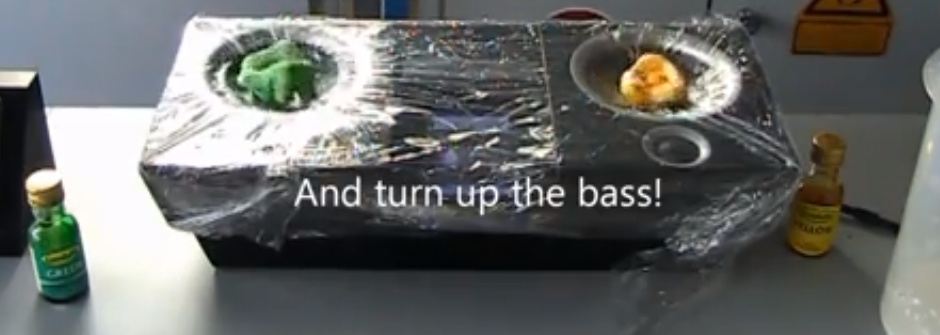
Next, we show you how to make an Oobleck (a non-Newtonian liquid made from cornflour and water) and then how to make it dance!
Continuing our series of articles written by NUI Galway Biotechnology undergraduate ReelLife Science team members, Cariosa Switzer introduces the concept of Convergent Evolution:
Convergent evolution is one of the most interesting topics studied within the field of evolution. It occurs when completely diverse species develop similar traits, habits or appearances, despite living in habitats that can be separated by thousands of miles. Their habitats usually have comparable aspects, such as climates or vegetation or the existence of predators. Dry regions of South Africa have a wide selection of succulent plants, some of which look very similar to American cacti, as both have evolved to endure minimal water levels. An example of animals that are linked by convergent evolution is the Honey Possum, native to Australia, and species of butterfly found all around the world. Both have evolved a long tongue for taking nectar from flowers (see below).
Echolocation is a type of biological sonar used by both dolphins and bats, and is a well-known example of convergent evolution. Although it may seem that bats and dolphins do not live in similar environments, in fact, they both live in areas where visibility is poor. For bats it is in dark caves and for dolphins it is murky waters. These animals use sounds to “see”, by emitting calls into their environment and listening to the echoes bouncing back from animals and objects nearby. From the strength and delay in hearing the echo they are able to determine how close they are to these objects.
Scientists from Queen Mary University of London studied whether bats and dolphins had genetic similarities (i.e. a similar “genotype”) as well as being physically alike (i.e. a similar “phenotype”). In their paper, which was published by the scientific journal Nature, they describe how they looked at the genomes (collection of an organism’s genes) of 22 mammals including bottlenose dolphins, bats that echolocate, bats that don’t echolocate, humans, horses, dogs and mice. This study has been the largest search for evidence for genetic convergence ever undertaken.
Through this research, the team of scientists were able to prove that there is evidence of convergent evolution in nearly 200 different areas of the genome. This is a huge amount, as one of the leading biologists in this research, Joe Parker indicated – “A few dozen would probably have surprised us”.
This discovery is proving fundamental to our knowledge of convergent evolution, as it was previously assumed that the similarities were mainly physical, however, now, a whole new door has been opened in the study of convergent evolution.
If you want to see for yourself how bats use echolocation why not try out this game?
The three Young Scientists proved that the use of Nitrogen-fixing bacteria can significantly accelerate barley seed germination rates, which has huge potential to improve the yield of valuable crops. The results are based on the analysis of the performance of over 5,290 seed samples in 105 experimental runs over a 6 month period.
We are honoured to have the three girls as part of our team, along with our other Expert Judges, Professor Andrea Brand of the Gurdon Institute in Cambridge and Professor Rhodri Ceredig of the Regenerative Medicine Institute (REMEDI) in NUI Galway.
Prof. Andrea Brand, Gurdon Institute, Cambridge
Prof. Brand’s research focuses on understanding how stem cells specialise to become part of our nervous systems, e.g. neurons, with the goal of repairing or regenerating damaged neurons in the brain or spinal cord. The Gurdon Institute was named after Prof. John Gurdon, who shared last year’s Nobel Prize for Physiology or Medicine “for the discovery that mature cells can be reprogrammed to become pluripotent.” This work has led to the development of the field of iPSCs, or Induced Pluripotent Stem Cells, where non-stem cells can be reprogrammed to become stem cells, and in turn, different types of cells from around the body.
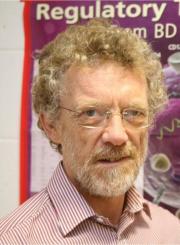
Prof. Rhodri Ceredig, REMEDI, NUI Galway
Prof. Rhodri Ceredig also works with Stem Cells, and is particularly interested in their role in the Immune System, work which is carried out in the Regenerative Medicine Institute (REMEDI) in NUI Galway. REMEDI’s main focus is using Stem Cells to promote organ and tissue repair and regeneration, in the areas of cardiovascular disease, diabetes mellitus and osteoarthritis. Prof. Ceredig has a particular interest in Flow Cytometry, which is a powerful technique used to count and separate cells into different populations. Check out the Irish Cytometry Society for more information.
We are delighted to have these eminent scientists as part of our ReelLife Science Team!




 ReelLIFE SCIENCE